Journey into the world's largest boreal forest, where the mighty brown bear reigns supreme among ancient pines and misty valleys.
Explore the Wild
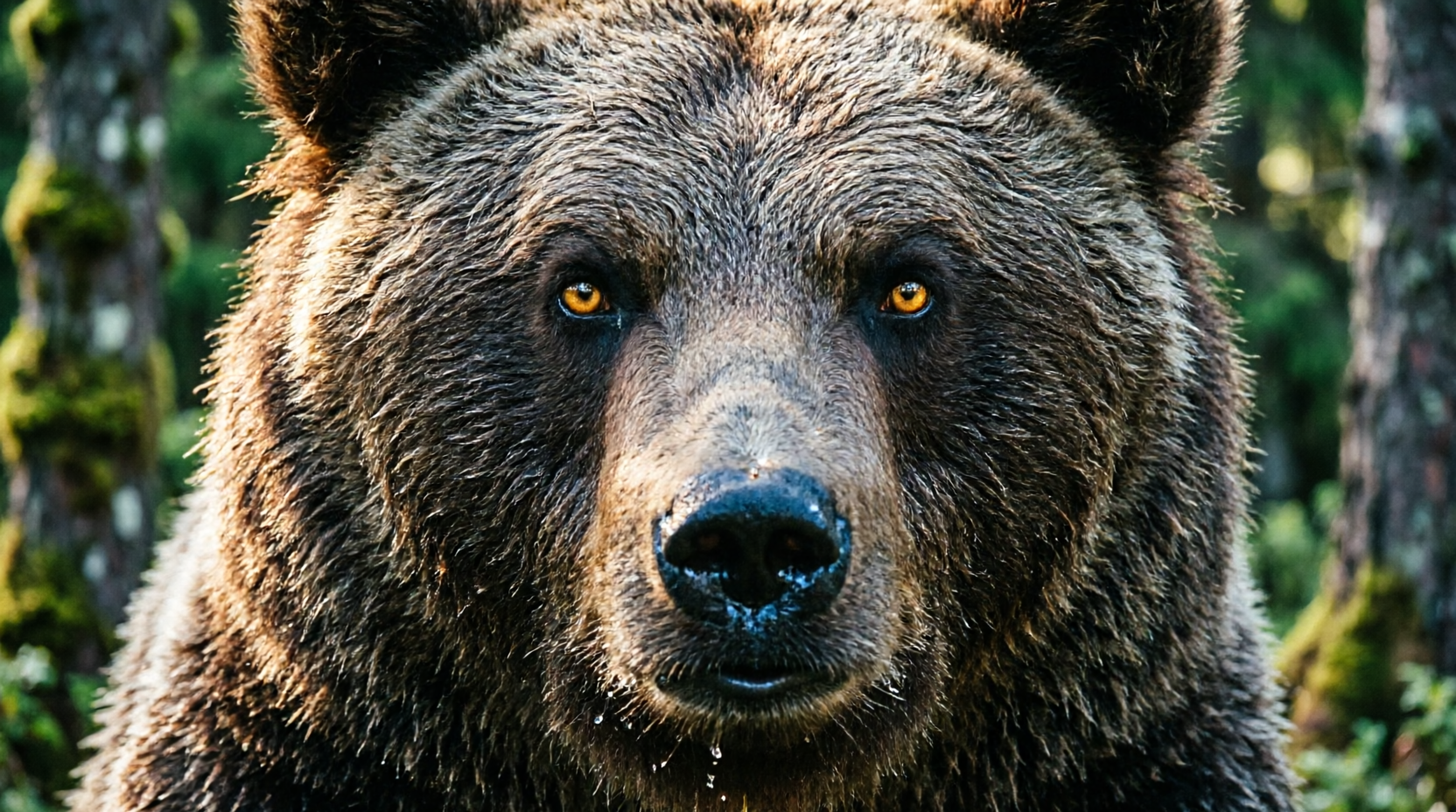
The Siberian brown bear, also known as the East Siberian brown bear, is a subspecies of the brown bear native to the vast taiga regions of eastern Russia. These magnificent creatures are among the largest land predators on Earth.
Adapted to extreme continental climates, they endure temperatures ranging from -50ยฐC in winter to +30ยฐC in summer, making them one of the most resilient bear populations in the world.
Stretching across 12 million square kilometers, the Siberian taiga is the largest terrestrial biome on Earth. This vast wilderness of coniferous forests provides the perfect sanctuary for brown bears.
From the Ural Mountains to the Pacific Ocean, these bears roam through ancient forests of Siberian pine, larch, and spruce โ a green ocean that has remained largely unchanged for millennia.
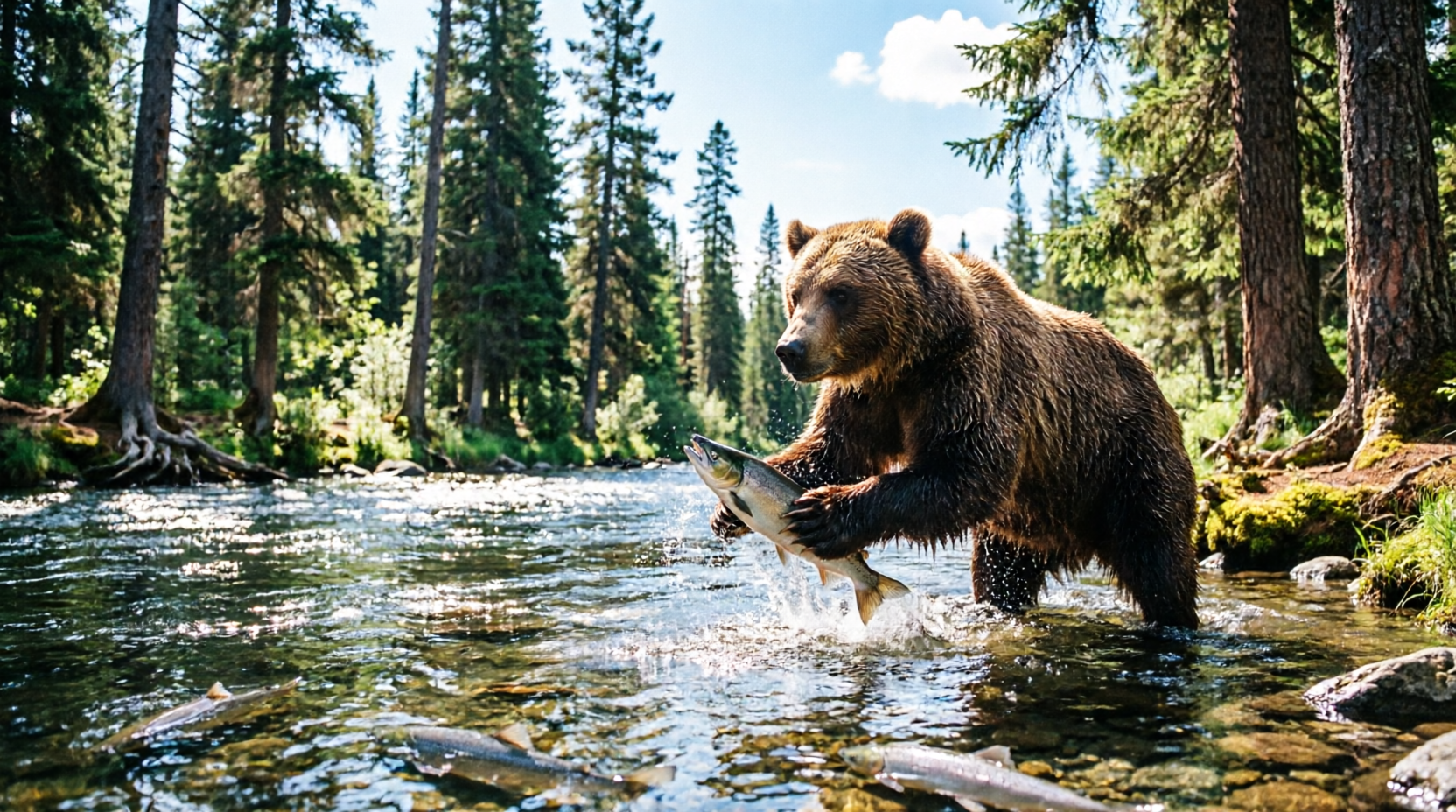
During summer, bears gather at rivers to feast on migrating salmon, consuming up to 30 kg of fish per day to build fat reserves for winter.
From October to April, bears enter deep hibernation in underground dens, lowering their metabolism and surviving entirely on stored fat.
In late summer and autumn, bears forage for cranberries, blueberries, and pine nuts โ essential foods that fuel their preparation for hibernation.
A bear's sense of smell is 2,100 times better than a human's โ they can detect food from 30 km away.
Despite their massive size, Siberian bears can run up to 55 km/h โ faster than most humans.
Bears can hibernate for up to 7 months without eating, drinking, or producing waste.
A single swipe from a bear's paw can exert over 1,000 pounds of force โ enough to break a moose's spine.
In the Siberian taiga, the bear is not merely an animal โ it is the spirit of the forest itself, ancient and untamed. โ Siberian Naturalist Proverb